Search This Blog

Showing posts with label ingredient. Show all posts

Tuesday, 5 January 2016

A WondAroma Podcast

Happy New Year!


Episode 10 of the WondAroma podcast features the Pell Wall perfumer Chris Bartlett talking to Christine Daley of Perfumer Supply House about:


The audio quality starts off rather poor but gets markedly better from about 14 minutes in and continues to improve throughout.


Here are some other links to things we talk about that you might find handy:


http://www.bsp.org.uk/- The British Society of Perfumers
http://www.perfumers.org/ - American Society of Perfumers
http://www.amazon.com/The-Perfect-Scent-Perfume-Industry/dp/0312425775 - Chandler Burr's book about Jean Claude Ellena (perfumer at Hermes)

Wednesday, 15 April 2015

Vanilla: the universal ingredient

Prosecco upgraded with Vanilla Cognac
Pell Wall style
Vanilla is one of the most useful ingredients in cooking, cocktails and perfumery.  Its story is quite well known, so I’m only going to touch on some of the less well-known aspects here.  My main purpose is to give details of a fine drink and a tincture that are easy to make at home.

So, first up, the drink: once upon a time, when I had more money and less sense I conducted a research project into the Champagne Cocktail - a hedonist’s research project rather than an academic one - I tried variations on the Champagne cocktail in every bar I could find that served one to try out the differences.  Much was learned and more was drunk ... including me from time to time.


Vanilla Cognac

Filtering the cognac
(while drinking coffee)
One of the things I discovered was a variation called the Vanilla Classic - sadly now both the bar where I found it and the key ingredient are gone.  That ingredient was Navan - a fantastic vanilla Cognac made by the same people who produce Grand Marnier.

So why am I telling you about a drink you can’t buy? Well, it inspired me to have a go at my own and I’d like to share the process with you:

Take one bottle of good (XO ideally) supermarket cognac and put in two pods of Ugandan Vanilla - leave it where you'll remember to shake it now and then for about four months.  Take out the pods, filter the cognac but reserve the pods (you’ll see why in a bit).

Almost done
Your Cognac should now be a beautiful mahogany colour and filled with complex vanilla flavours as well as all the richness of the fine brandy itself.  You can drink it just as it is, add sugar to make something that more closely resembles Navan but I think it works fantastically used to upgrade a glass of Prosecco - which has enough sweetness of its own to sustain the extra alcohol - drink and enjoy!


Vanilla Tincture

Don’t waste the beans after you’ve
made the vanilla cognac
Now back to those pods: it seems a shame to let them go to waste and one of the lesser-known facts about vanilla is that in perfumery the absolute (see this post for a definition of absolutes and other extracts) is normally used but it isn’t easy to work with, so for the small-scale perfumer a tincture is an alternative.

Here’s my technique for a tincture that’s a bit out of the ordinary:
Let the pods from your cognac-making dry out then chop them up, along with another fresh pod or two, weigh them all together and put the whole lot into nine times the weight of perfumers alcohol (so as to create a 10% Tincture), adding a shot or two of the cognac to the blend (I used about 50g).  Just as with the cognac, wait for at least four months shaking whenever you think of it but at least every few days.

Result: vanilla cognac you can drink plus a vanilla tincture that you can use in perfume making at about 7 times the quantity you would the pure absolute.  The cognac in the tincture gives it an extra complexity and also encourages more flavour out of the pods due to the water content - unlike many materials vanilla tinctures better in a lower strength alcohol 

Resist the temptation to drink the tincture though ...

Saturday, 14 March 2015

Tolu Balsam

Tolu Balsam is a very useful natural fixative as well as a lovely base-note in its own right, but it isn’t the easiest of materials to handle.  It comes from the South American tree Myroxylon balsamum.  

It is used to fix materials such as juniper, petitgrain, spices and florals of many kinds and frequently forms a key component of oriental and chypre styles of perfume.
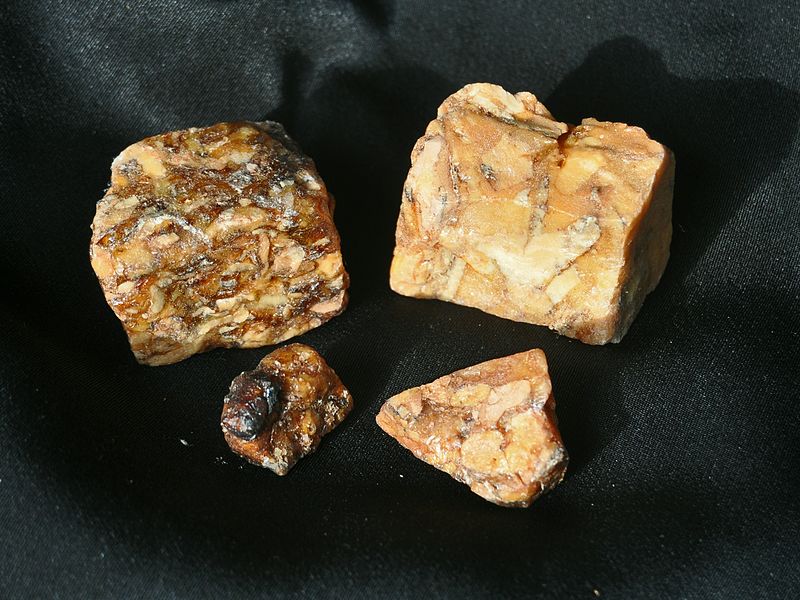
Rock-likc pure Tolu Balsam


Arctander describes it as: "a brown, orange-brown or dark yellowish brown mass, brittle when cold, and the fracture is glasslike or flintlike. Its odor is sweet-balsamic, cinnamic in type, faintly floral and with an undertone of vanillin.” and at normal UK temperatures it’s certainly rock-hard and behaves rather like a chunk of Brighton Rock when it’s broken.


Tolu and TEC form a strange, alien landscape
So to make it practical to handle it needs to be diluted in a suitable solvent - it’s often sold already diluted in this way though the dilution isn’t always declared nor the solvent named - I bought a pure Kg recently and diluted it ready for use in TEC (tri-ethyl citrate) in a process that turned out to be both quite involved and to produce some fun images, so I thought I’d write it up here.


Is that a creature emerging?
The first job was to get the Kg of rock-like Tolu Balsam soft enough to pour out of its container, which I did by sitting the container in a bain-marie and boiling the water beneath it: this took a few hours before the material was fully liquid.  Meanwhile a pre-weighed out amount of TEC was heated on my heater-stirrer with a stirring bar already in the bottom of it (if you don’t heat the solvent as well the tolu will go hard again as soon as it hits the cool liquid and takes much longer to go into solution).

The next step is to pour the hot, liquid tolu into the pre-warmed solvent (insulated gloves are called for for this step of course).  At this point we realised that there was a photo opportunity as the resulting non-yet-mixture looked like an alien landscape.  The tolu settled to the bottom of the solvent and the application of glass rods was necessary to get it to start dissolving as it was much too sticky for the automatic stirrer at that stage: as those went in it started to look like one of those scenes from the Alien series where the creatures start unfolding from the cave walls . . .

  This is all being done in a three litre glass beaker and as you can see in the later pictures the manual stirring took some time before we could leave the automatic stirrer to get on with the job on its own and the balsam tended to dry on the glass very quickly too.

The cling film you can see was to minimise loss of aromatic quality as this was all being done hot, although with such a high-boiling material and high-boiling solvent that isn’t a big concern.

A stirring start
Gloopy-looking stuff

Pasta possibly?
Eventually it reached the stage where it was liquid enough for the automatic stirrer to do its stuff and with the stirrer on a low setting it was left overnight to complete the mixing, kept at a constant 60 degrees centigrade by the integral heater.  By morning it was fully mixed to form a dark brown, consistent, mobile liquid and here you can see me concentrating hard as I pour it into a (slightly pre-warmed) 3Kg glass reagent bottle. The bottle is on the scale so that I can check the amount that’s gone into it for stock control purposes.
Perfect for Perfume: Tolu Balsam at 30% in TEC


We even captured a little video of that part of the process, which gives you a clear idea of the consistency once it’s finished:


A few chips and flakes were left over from the mixing process and these were put into a plastic jar  - the picture at the top of this post is of those, a few weeks later by which time they have merged together to form a single solid but uneven lump, much like that with which the whole process started.

Thursday, 12 March 2015

Special Offer Ingredients

Clearance Bargain Ingredients - only one of each!

From time to time people order perfumery ingredients from me and, either because they say they are in a hurry or just because I’m trying to keep ahead of things, I make up the order before they pay . . . then sometimes they don’t pay, either because they changed their minds, ran out of money or perhaps because it was just a wind-up or a fantasy...

Me in declamation mode ;-)
Whatever the case I put the material aside to include in a future order but one way and another the storage shelf has become rather cluttered with these orphans, so I’ve decided it’s time to shift them, so here’s your chance to snag yourself a serious bargain:


  • Azarbre, 10mlsold
  • Azarbre, 25mlsold
  • Camphene at 50% in IPM, 100mlsold
  • Cedarwood Atlas Supra, 100mlsold
  • Dihydro Ionone Beta, 10mlsold
  • Fixateur 505E, 100ml, sold
  • Fixateur 505E, 100ml, £99 *New*
  • Geosmin at 1% in DPG, 100ml, sold
  • Hedione (original Firmenich), 1Kgsold
  • Hexalon / Tropical Ionone, 10mlsold
  • Hydrocinnamaldehyde, 25mlsold
  • Ionone alpha, 100mlsold
  • Iso E Super, 200mlsold
  • Iso E Super, 100ml, sold
  • Methyl Diantilis, sold
  • Musk Ketone at 10% in BB/ethanol, 1Kgsold
  • Myrcene, 5ml, free with anything else
  • Nectarate, 100mlsold
  • Nutty Pyrazine, at 0.1% in IPM, 4ml, free with anything else
  • Olibanum Resinoid (Frankincense resin) 30% in TEC, 500g £35 *New*
  • Orris Givco 204, 500g sold 
  • Rose Givco 217, 25ml, sold
  • Rose Otto Persian, 30mlsold
  • Rum Acetal at 50% in DPG, 25mlsold
  • Traseolide, 500g £29 *New*
  • Veramoss/Evernyl, 30gsold
  • Zenolide, 100mlsold

Note that in each case what’s on offer is the specific size indicated: if you wanted another size they are all on the list (except Rum Acetal which I no-longer stock), but then you don’t get the benefit of the special clearance price.  Note 13/3/15: Just added Musk Ketone, pre-dissolved in benzyl benzoate and ethanol - a real bargain as it’s notoriously hard to get into solution - and another one I no-longer stock having changed over to IFF’s Musk Ketone Replacer.

UK Shipping on these is, as usual for ingredient sales, at the flat rate of £9.50 however many or few you buy.  If you’re anywhere else in the world, I’ll have to quote.

If you want to combine these with an order from the main lists that’s absolutely fine, but pay for these first or you might miss them while you’re browsing through the 300 other materials on offer!

Payments by PayPal or fast Bank Transfer please to secure them: Send an email to enquiry@pellwall-perfumes.com saying what you want and where you are.  I’ll process those in the order they arrive.

Order quickly to avoid disappointment!

Tuesday, 10 March 2015

Perfumery Ingredients at Pell Wall

The March issue of my Ingredients List is now online and the list now features some 300 materials, both natural and synthetic, with some very exciting new additions and a spectacular price reduction on one material thanks to some help from a friend in the US.

There are two versions of the list on the website and both can be downloaded or printed for easier reading as well as browsed directly on the site itself.  The first features descriptions of the odours and uses of the materials both from their manufacturers and from me.  I’m expanding this aspect all the time and there are new write-ups included since the last release in January.

alt : Ingredients for sale pdf

But if you just want to compare prices with other ingredient suppliers you’ll appreciate the second list more - it’s just product names, CAS numbers and prices presented in tabular form:


alt : Price List for Ingredients

Among the new additions you’ll find several new naturals such as labdanum absolute, orange flower absolute and violet leaf absolute - all among my favourite ingredients to use, though not cheap I’m afraid.

Speaking of cheap, that big reduction is for Centifolether - down from £52 for 100ml to just £22.  Also very good value is a new musk I’m offering for the first time that you don’t see about much called Zenolide: it’s a great material, as good as some of it’s better known brothers yet almost as cheap as Ethylene Brassylate so you can use it freely.  £17 for 100ml.

But if you want to find out what all the other new things are, you’ll just have to take a look at the lists :-)


Saturday, 10 January 2015

The Quinolines

I thought it might be useful to do another in my occasional series of disambiguation posts about perfumery ingredients with easily confused names or equivalences.  This time I’m looking at a group of similar ingredients used to create an earthy, leather note in fragrances:


No quinolines in
Sticky Leather Sky
Isobutyl quinoline (CAS number 65442-31-1), of which there are several versions on the market all using that name and a version made by Givaudan called Pyralone and one made by Symrise called Isobutyl quinoline 54.

Butyl quinoline secondary - another Givaudan product name - designates a mixture of two isomers: CAS numbers 65442-31-1 and 67634-06-4, the second of which is 8-tert-butyl quinoline, which is not present in Pyralone.

Isobutyl quinoline (CAS number 68198-80-1) is another material produced by Symrise under the same name and, despite the name, is not equivalent with either of the Givaudan products.


Just as a matter of curiosity, I didn’t use any of the above materials to create the leather notes in Sticky Leather Sky: there are lots of alternative means of creating such notes, but that’s for another post.

Wednesday, 13 August 2014

How To Make Perfume

The spread at the beginning of the article
as it appeared in print on 3rd August 2014
If you want to make perfume yourself and are looking for help to get you started, this is the place. Here are links to methods, sources of ingredients, recommended equipment and advice: everything I wished I could find when I started out myself!

On the 3rd of August the Independent on Sunday ran an article, which featured on the front page of the magazine, on the theme of how difficult it is to get started in perfumery whether you intend it as a hobby or, as I did, want to make a living at it.  I was interviewed for that article along with several other independent and amateur perfumers.

The article is by Rhodri Marsden and the accompanying photography by Dan Burn-Forti.  Dan has kindly supplied me with pictures from the photo-shoot we did for the piece and I’m featuring some of the ones that were not used in the article in this post.

I don’t propose to repeat any of what was said in the article here - it stands on it’s own - what I do want to do is to provide here some links and tips that may be helpful to those starting out or struggling with some of the problems the article highlights.

Part of the ingredients store
at Pell Wall by Dan Burn-Forti
So, first up if you’re looking for ingredients and don’t have the budget or space for an array such as we have at Pell Wall, where can you go to get supplies in smaller amounts?
  • Pell Wall sell one of the largest ranges of perfumery materials available online in quantities from 10ml / 10g upwards, and can also offer a comprehensive range of starter kits.
  • De Hekserij in the Netherlands have a good range and now also an English language website which makes ordering much easier for those of us who don’t speak Dutch
  • Perfumer’s Supply House in the USA have a growing range including some very unusual ingredients
  • Perfumer’s Apprentice in the USA have a large range including most of the basics you’ll need.
Chris in the Lab at Pell Wall
 by Dan Burn-Forti
All the above are reliable suppliers I’m comfortable recommending.  Those in Europe should keep in mind that ordering from the US will mean you’ll need to pay both VAT and Duty on import - exactly how that works depends on the courier the supplier uses - talk to them first so you know what to expect - however the reverse case isn’t so bad as the US does not charge duty on import for most perfumery materials.  Shipping is also a significant factor when ordering from abroad, so I recommend looking at suppliers as close to your own location as possible first.

For help with learning the art itself I’m going to point to other more detailed posts offering help:
More ingredients than you can shake a stick
(or a smelling strip) at by Dan Burn-Forti
Places you can go to get some training or practice in the UK include:
  • My own workshops in London or Shropshire - advertised on this blog as they come up
  • The Cotswold Perfumery where perfumer John Stephen runs regular courses and, once you’ve attended one, will also sell you ingredients and equipment.
  • Karen Gilbert runs courses online and in London covering making perfume and skincare

Some detailed posts about particular ingredients:
If all that didn’t answer your questions, you’ll need somewhere else to turn: I’m adding things to this blog all the time, so do please keep a watch here.  I’m also one of many people, including some other fully qualified perfumers, who answer questions, collaborate with one another and generally exchange information about this fascinating art and science in two main forums:
Join up on either or both and add your voice to the conversation.
Chris and Jungle (one of the Pell Wall Pack) in one of the
ingredients stores at Pell Wall by Dan Burn-Forti

Finally, let me just add that if you’re looking for specific advice or assistance with any perfumery problem and, for whatever reason, you don’t want to post about it on those public forums I’m willing to help - for a small fee - check the consultation section of the website for details.

Happy perfume making!

Sunday, 10 August 2014

Sandalwood found to have wound healing effects

The implications of a fascinating piece of new research could be widespread: 

Researchers at the Ruhr-Universität Bochum in Germany have found that not only are there olfactory receptors in the top layer of human skin, but have shown that a particular sandalwood odourant can trigger those receptors resulting in increased growth and migration in the surrounding cells.


As this is such new research, there is every chance that other odourants will, in the future, be found to have similar or perhaps quite different effects on the skin with obvious implications for their use in perfumery as well as for medical and other applications.

This research, led by Dr Daniela Busse and Prof Dr Dr Dr med habil Hanns Hatt from the Department for Cellphysiology published their report in the "Journal of Investigative Dermatology”.  


There are many synthetic sandalwood
odourants of which this is one
Reporting of the findings appears in Time but they don’t mention there, the answer to the question that will be uppermost in the minds of perfume-makers: which specific odourant has this effect?

The answer is it was Sandalore (a brand name owned by Givaudan) or 3-methyl-5-(2,2,3-trimethyl-1-cyclopent-3-enyl)pentan-2-ol, if you prefer the chemical designation.

Wednesday, 30 July 2014

Lily of the Valley – mystery, manufacture & murder

Mystery

Perfumery has always glorified the floral and for centuries perfumers have sought ways to extract the essence from real flowers to incorporate into their creations. With many flowers this quest has met with considerable success, with a few commercially viable products produced that are still used in modern perfumery: rose and jasmine being the primary examples. 
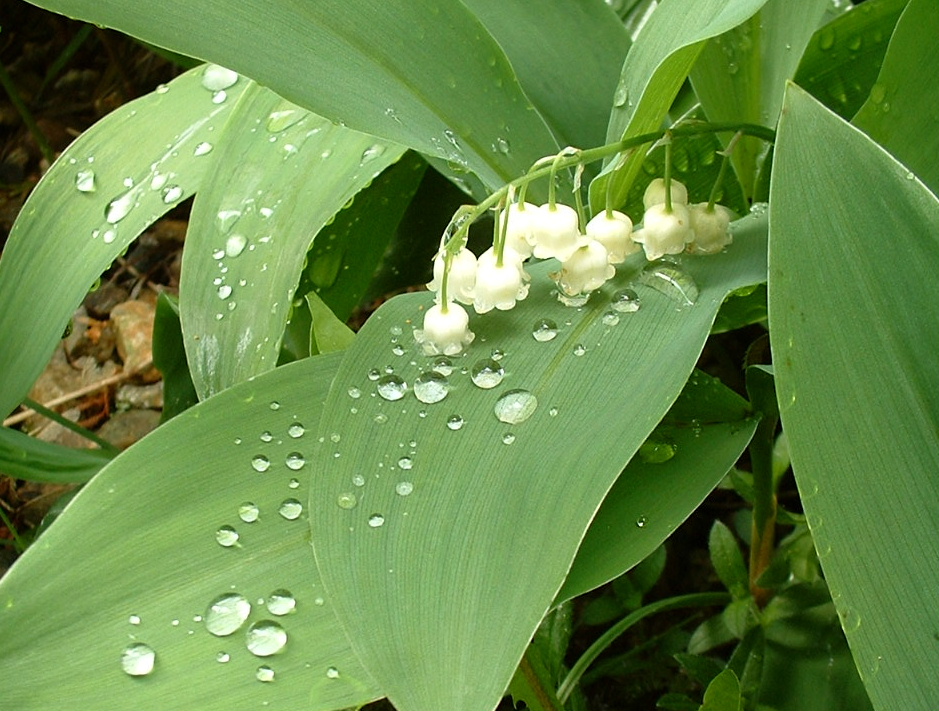
Lily of the Valley - picture courtesy of Wikimedia Commons
One flower that has always eluded extraction is the Lily of the Valley (Convallaria majalis) or Muguet*: distillation yields very little of an unpleasant smelling oil not a bit like the dense, exotic scent of the fresh flowers.  Solvent extraction and even modern CO2 extracts have similarly been completely unable to capture the scent.  This is because the flower produces the scent only at the point of release – none is stored in the flower – so it cannot be extracted.  The flower itself only contains pre-cursor chemicals from which the scent is formed directly into the air.
Diorrissimo - picture from Basenotes
Yet many people will be familiar with the scent of Lily of the Valley, not through smelling the fresh flowers, but from perfumes containing or replicating its scent – perhaps the most famous of these being Diorissimo.  So, if you can’t extract the scent, how is that done?


*Muguet is the French word for Lily of the Valley, a flower popularly used at weddings.  Lily of the valley is a  sweetly scented (and highly poisonous) woodland flowering plant that is native throughout the cool temperate Northern Hemisphere in Asia, Europe and in the southern Appalachian Mountains in the United States.


Manufacture

Here we see how the chemist is the perfumers best friend: a good number of materials have been discovered or created that replicate, at least in part, the scent of these mysterious flowers.  Many people would say that synthetic Lily of the Valley begins with the synthesis in the early part of the 20th Century of Hydroxycitronellal: it’s difficult to be sure exactly when it was first used because the nature of the material was kept a closely guarded secret.  What we do know is that as early as 1906 it was being made by Givaudan and sold under the trade name Laurine. 
Dr E Emmet Reid
Credited with re-discovering Hydroxycitronellal
Image from The Johns Hopkins University
At the outbreak of WWI it was being manufactured in Germany and, as the war meant it ceased to be available, efforts were made to find ways to make it that resulted in it’s being manufactured in an American factory and, during the 20s, it gradually become well-known within the trade.  Most perfumers would agree that, while no one chemical can ever fully represent the scent of a flower, hydroxycitronellal gives a very close facsimile to the aroma of the fresh flowers of Lily of the Valley.  Curiously enough however it does not appear to be present in that, or any other natural flower scent.
I’m presenting in the sections at the end of this post, descriptions of a selection of materials that replicate the scent of Lilly of the Valley, with descriptions of their olfactory properties as well as, in many cases, the restrictions on their use that have led to their decline.  These are mainly for the benefit of DIY perfumers, but may also be of interest to perfumistas curious about ingredients.  I’ve included quite a few quotations from Steffen Arctander’s wonderful descriptions of aroma chemicals – rather less well known than his work on materials of natural origin – but just as good.


Murder

Structure of Lyral - image courtesy Wikimedia Commons
So where does the murder come in?  Well in one case a forthcoming ban by the European Union will, over the next couple of years, result in the certain demise from perfumery altogether of one of those materials.  The material that is being killed off by the regulators is Lyral and although it’s only going to be banned in the EU, that will very likely be reflected in a prohibition by IFRA (the International Fragrance Association) and even if it isn’t all the major perfume manufacturers will phase it out of use completely, so it will effectively vanish from the world.

After the jump you can read detailed descriptions of a range of materials used in connection with Lily of the Valley scents.

Friday, 19 July 2013

Natural Perfume Materials: what the terms mean


There are quite a few methods by which the aromatic principles of natural materials are made available for use in perfumery and unfortunately some of the terms used are obscure and others are sometimes mis-used.

The purpose of this post is to set out the main terms used, together with definitions of widespread acceptance.  In putting these together I have relied on two main sources: first Arctander’s Pefume and FlavorMaterials of Natural Origin – written in the 1950s and early 60s but still regarded by most perfumers as the definitive work.

Second Brian Lawrence who is published regularly in Perfumer & Flavorist Magazine and elsewhere and is, probably, the definitive modern writer on the subject.


Before we get into the terms for natural materials, it is perhaps useful to examine what we mean by natural in this context and eliminate terms used to indicate synthetic materials.  Very few materials are suitable for use in perfumery exactly as they occur in nature: citrus oils and copaiba balsam are the main exceptions, requiring no processing beyond pressing the peel or releasing the balsam from the tree: in the great majority of cases processing is necessary and in some cases the odorous principles only form during processing (see my post on Bitter Almond Oil for an example of this).  A material is generally considered to be ‘natural’ when that processing is primarily physical, rather than chemical, in nature: these things are what this post is about.
Fragrance Oils are not usually natural

The term Fragrance Oil is widely used to indicate a blend of materials that may be both natural and synthetic, designed to replicate a natural odour.  These are often composed entirely from synthetic ingredients and almost never with entirely natural ones and as such do not fall within the definition of a natural material.  Occasionally they may be passed off as natural, sometimes innocently by traders who have themselves been deceived by a producer, but for the most part they are sold labelled as ‘fragrance oil’ and are usually cheaper than natural equivalents where these exist.

The main types of volatile isolates that are obtained commercially are essential oils, concretes, absolutes, pommades, resinoids, spice/herb oleoresins, extracts, infusions, and tinctures. The definitions of these, and some other important terms are set out here and for convenience I’ve started by listing first the three most common types – Essential Oil, Concrète and Absolute.  All other types follow in alphabetical order for ease of reference.

The most common natural materials


Bergamot in cultivation
(courtesy Wikimedia)
Essential Oil: The isolated aromatic portion of a plant that is borne in that plant within distinctive oil cells. In some exceptional cases the essential oil is formed during processing. Most essential oils are isolated by either hydro-distillation (water, steam or both) or cold pressing with some few being produced by dry (including destructive) distillation.  Water distillation implies direct contact between the plant material and the boiling water, steam distillation implies steam being produced separately and blown through the material – in the combined case the water is heated by injected steam.  Some essential oils are routinely ‘rectified’ after production – a process that may be entirely physical or may involve the introduction of synthetic aroma chemicals to standardise the odour.  Examples include Bergamot, which is routinely rectified to remove bergaptens (furocoumarins) – this is done by fractional distillation.  White Thyme is natural thyme oil that has been corrected by the addition of aroma chemicals to produce standardised oil chemistry – for most this would no longer be considered a natural product.

Concrète (often written as concrete with the same meaning):  an extract of fresh (cellular) plant material made using a hydrocarbon solvent, commonly hexane or petroleum ether. It is rich in hydrocarbon soluble material and devoid of water-soluble components. It is generally a waxy semi-solid, dark colour material free from the original solvent used in extraction, often containing a high percentage of largely odourless plant waxes.

Orris root being dried
One important note here on misuse of this term concerning Orris Butter, which is frequently called Orris Concrète, but is more correctly the essential oil of orris (the roots of certain species of Iris), which happens to be solid.  There is also a true Orris Concrète, from which a true Orris Absolute is made – the latter is a clear, mobile liquid unlike the so-called Orris Concrète or Butter which is solid at room temperature.

Absolute:  A highly concentrated alcoholic extract, usually of a concrète, which contains only alcohol soluble materials. Its primary use is in alcoholic perfumes but normally contains little or no residual ethanol.  Absolutes are also sometimes extracted from pommades (sometimes called Absolute from Pommade or Absolute from Châssis - the latter term is sometimes used to describe an absolute made by extracting the spent flowers already used in enfleurage).  An Absolute from Distilation Water (e.g. Rose Water Absolute) is also sometimes made using the hydrolat left over from making an essential oil as the starting material.  Sometimes the term Absolute is also used to mean the alcohol soluble fraction of a resinoid.

Other terms in alphabetical sequence


Copaifera langsdorfii 
Balsam: A natural exudate obtained from a shrub or a tree (either physiological or pathological). It is characterized by being rich in benzoic and cinnamic acids and their corresponding esters and is insoluble in water but completely or almost completely soluble in ethanol.  Balsams may, upon ageing, form resins and so the boundary between these two may be blurred.

CO2 Extract – these include a range of extraction processes using carbon dioxide as the solvent.  In most cases the solvent used is rendered liquid at much higher temperatures than normal an so the extract produced is often, more correctly, referred to as SFEsupercritical fluid extract – and I’ve said a bit more about it under that heading.

Extract: A concentrate of a dried less volatile aromatic plant part obtained by solvent extraction with a polar solvent.  In practice this term is used quite indiscriminately to mean several of the types of processed material where there result is concentrated – with the solvent removed.  In flavour work the term is used even more widely to include emulsions and diluted materials that may be water soluble (possibly dissolved in water) and of very short shelf-life. To be meaningful this term really requires further qualification or clarification and perfumers should approach ‘extracts’ with appropriate caution.

Note that the French term ‘extrait’ (directly translated this would be extract) is used in English to mean something quite specific: An alcoholic extract of a pomade produced by enfleurage: a tincture of a pomade.   The term is also occasionally hijacked to mean an alcoholic dilution of any material of a particular strength or a blended perfume of a particular strength “extrait strength” is sometimes used to mean much the same as Parfum, that is an alcoholic perfume with 15-30% aromatic ingredients.

Gum: Can be either a natural or synthetic material but, strictly, should be used only for water-soluble materials of very high molecular weight.  In perfumery it can, however, also be used of resins and turpentines.  Under the strict definition gums are odourless and therefore of no use in perfumery.
Commiphora myrrha tree one of the primary sources
from which the oleo-gum-resin
myrrh is harvested.

Gum Resin: A natural exudate obtained from a tree or plant. It is comprised of gums and resins. If the gum resin source also contains an essential oil, it is called an oleo-gum-resin.  Only partially soluble in alcohol, hydrocarbons etc. and may be partially soluble in water where the proportion of gum is significant.

Infusion: A hot extraction of either a plant part or its exudate with either water or an organic solvent. Infusions are not at all popular because it is difficult to control their chemical composition.

Isolate: sometimes clarified as natural isolate, this is prepared material, produced from a precursor of natural origin, most often an essential oil, by any of a range of physical processes including fractional distillation or freezing, chromatographic separation and others.  At one time many perfumery materials were made this way that today are available much more cheaply as synthetics.  Natural perfumers may still take advantage of the fact that many natural isolates continue to be produced commercially for the flavour industry where the premium on natural flavours justifies the increased cost of production.

Oleoresin: The natural tree trunk or bark exudate, which is extremely rich in an essential oil.  The term is occasionally also used of prepared materials.  In either case they consist of essential oil and resin.  Turpentines are oleoresins where the resin portion is acidic.

Pommade:  The product of the enfleurage fat extraction of fresh flowers. Enfleurage was once much more widely used than today but is still the most efficient (highest yielding) method with certain flowers that continue to manufacture perfume in the flower after it is cut, such as tuberose for example.

Resin Absolute: generally applied to materials obtain directly from plant raw-materials by extraction with hot alcohol: once the alcohol has been recovered, what is left is referred to as the Resin Absolute.  As the product is often very thick and sticky, the recovered alcohol may be partially replaced by a high-boiling solvent such as Isopropyl Myristate when it is usually sold as ‘mobilised with N% of XX’.  Notable exceptions include the extraction product of Oakmoss with hot alcohol, which is usually called Oakmoss Resin; that of Orris is likewise called Orris Resin.

Benzoin resin from which Benzoin Resinoid is made
Resinoid:  A solvent extract of a resin-rich material containing natural exudate or dried plant material with a hydrocarbon solvent. Resinoids are generally viscous to semi-solid mixtures. They can be considered as being equivalent to concrètes but made from dead / dried (non-cellular) materials.

Spice/Herb Oleoresin: A solvent extract of a dried spice or herb, which is virtually free from the extracting solvent. It is used more-or-less exclusively by the food and pharmaceutical industries as a replacement for ground spices and spice tinctures.

Supercritical Fluid Extract This is an extract made using supercritical carbon dioxide (CO2) or another suitable supercritical fluid material as the solvent. Supercritical fluid extraction (SFE) of plant material with solvents like CO2,
propane, butane, or ethylene is increasingly being done. SFE allows the processing of plant material at low temperatures, hence limiting thermal degradation, and avoids the use of toxic solvents.  A common downside of SFE is that the resulting material may not be fully soluble in ethanol and in many cases further extraction with ethanol to produce, what is in effect an Absolute from SFE is conducted – these are sometimes sold as CO2 Select Extract or, more intuitively as Ethanol Soluble SFE.

Tincture: An alcoholic or aqueous alcoholic extract of a natural raw material in which the solvent is left in the extract as a diluent. Tinctures are used both in the fragrance and pharmaceutical industries. The amount of alcohol in the tincture, which ranges from 20-95%, is standardized by the manufacturer.  See my post on Ambergris for an example of a tincture used in perfumery


Thursday, 7 February 2013

Aldehydes: identification and storage

One of the fragrance ingredient groups that many people with a bit of knowledge of fragrance have at least heard of is the Aldehydes. Made famous by their inclusion in Chanel 5 they have been in widespread use in perfumes since the 1920s.

When we talk about aldehydes in the context of perfumery what is usually meant is the group of odorous chemicals more accurately called saturated aliphatic aldehydes.  There are in fact quite a lot of other aldehydes routinely used in perfumery including such commonplace materials as vanillin (the key component in vanilla) but in this post I'm focussing on that particular group with the characteristic aroma, described by perfume people as 'aldehydic'.
The structure of C12 MNA - one of the key aldehydes used in perfumery
Besides being olfactorily interesting these materials also have some special characteristics from the perspective of storage and use.  All are very powerful and hence tend to be used in very low doses but they can have a very high impact on the scent.  Several are found in nature, notably in citrus oils where they contribute to the bright, sparkling, fresh nature of those materials.

Here are some details I put together in response to a question about what exactly they are and how they should be stored and handled:
What are Aliphatic Aldehydes?
  • Octyl aldehyde (AKA Aldehyde C8 or octanal)
  • Undecenyl aldehyde (AKA Aldehyde C11 undecylenic;Aldehyde C11 enichendecenal or Aldehyde C111)
  • Undecylic aldehyde (AKA Aldehyde C11 undecylic or undecanal)
How do you store aliphatic aldehydes?
Aliphatic aldehydes (saturated) are the ones most people mean when they talk about aldehydes in the context of perfume:
But notice that the so-called Aldehyde C14 (AKA Peach Aldehyde or gamma-Undecalactone), Aldehyde C16 (Strawberry glycidate or lots of alternate names) and Aldehyde C18 (Coconut Aldehyde or gamma-Nonalactone) are not on the list because they are not in fact aldehydes at all*.

There are lots of other aldehydes but they don't exhibit the same special characteristics for storage purposes as the saturated aliphatic aldehydes - the ones listed above are the main ones used in perfumery, though there are a few others used by some manufacturers as captives*.
All the saturated aliphatic aldehydes are best diluted in a primary alcohol* as soon as you get them - in alcohols they form hemi-acetals which smell like the aldehyde they are formed from but are much more stable (in solution). Personally I like to keep my aldehydes at 1% for blending purposes but for storage 10% is more practical as it keeps the volume you have to store more manageable.

If you keep them neat they tend, over time, to either oxidise into the corresponding acids, which smell nasty; or polymerise into trimers, which have no smell at all. The presence of any acid (including oxidation products) will accelerate the trimer production significantly. The really counterintuitive point is that trimers continue to form at very low temperatures and seem to form faster, so you should keep your aliphatic aldehydes at room temperature until you've diluted them in alcohol.

You'll know if your aldehydes have trimerised because, besides smelling less strong than they should, they will have become thicker & will eventually be solid at room temperature as the trimer has a much higher melting point.

Adding BHT or other anti-oxidant can help with both problems, though won't eliminate them completely. There is also some evidence that they keep better in aluminium than in glass.

At Pell Wall we’ve found in practice that by far the worst culprit for trimer formation is Aldehyde C12 Lauric.  It’s so bad that we don’t sell the undiluted material at all: as soon as fresh stock arrives we dilute it to 10% in ethanol and benzyl alcohol and sell it in that form so that it remains in good condition.


Footnotes

* these materials came to be called Aldehydes because when they were first discovered the manufacturer wanted to conceal their chemical identity and so deliberately mis-named them to confuse those who might want to copy the new molecules.  It helped that they had a comparable power to the true aliphatic aldehydes.  In many quarters the names have stuck and they are still widely referenced and sold as aldehyde C14, aldehyde C16 and aldehyde C18.

* a captive is a molecule that is either patented by or kept secret by a manufacturer for use only in their own fragrances.


*the obvious primary alcohol to use is ethanol (or Perfumer’s Alcohol), since you are probably going to use them in an alcoholic fragrance in the end anyway, but phenyl ethyl alcohol or benzyl alcohol work too and might be preferable in some applications.


Much of the information in this post is sourced from Perfume and Flavouring Synthetics by Paul Z Bedoukian